Beethoven Was Not a Genius — He Was Someone Who Refused to Stop

Everyone thinks they know Beethoven. The tragic genius who went deaf and still made music. The stone-faced portrait hanging in school hallways. But strip that away, and what's left is something nobody talks about.
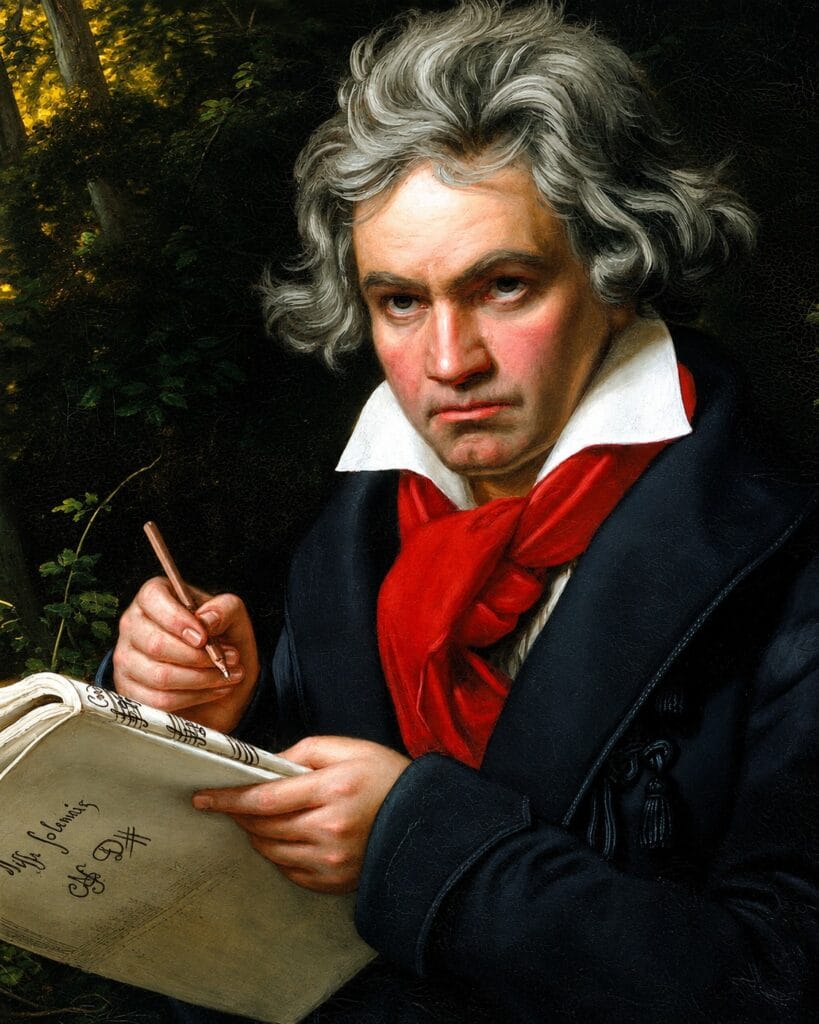
At sixteen, he legally pushed his own father out of the family. At thirty, he took a knife to his greatest work. At forty, he wrote letters he never sent, to someone he never named. At fifty-three, he stood on a stage and couldn't hear a single note of the music that made five thousand people cry.
This isn't a biography. It's what a few torn pieces of paper left behind.
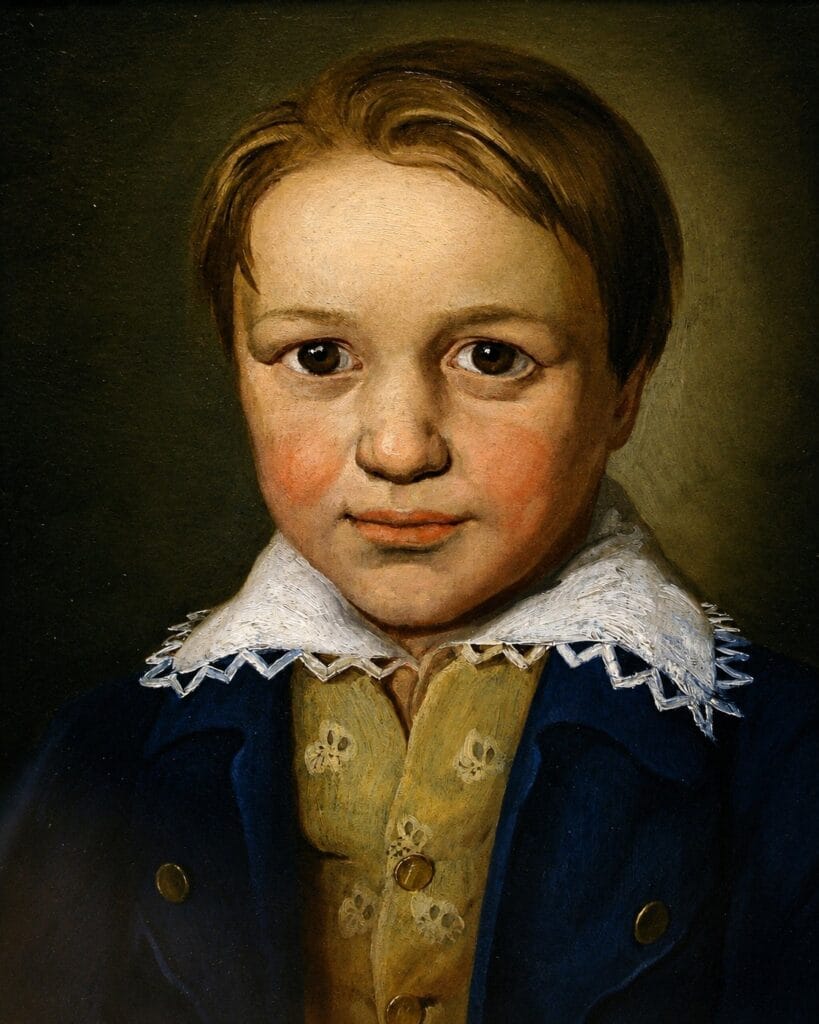
The Sixteen-Year-Old Who Fired His Own Father
1787. Bonn, Germany. A dark side street. His mother was dying of tuberculosis in the back room, struggling to breathe. His father had drunk himself useless. Two younger brothers sat in the corner with nowhere to go. The oldest son was sixteen years old.
The boy walked to the court of the Elector and put a document on the table. His ask was simple: "My father can no longer support this family. Give me half of his salary directly." The Elector said yes. That day, his father was officially retired. The legal head of the Beethoven household was now a teenager.
Every month, he went to collect the money himself. Bought clothes for his brothers. Put food on the table. At night, he wrote music with those same hands. The document that records all of this still sits in the archive at Beethoven-Haus Bonn. It wasn't the beginning of a great career. It was a grocery bill. It was survival.
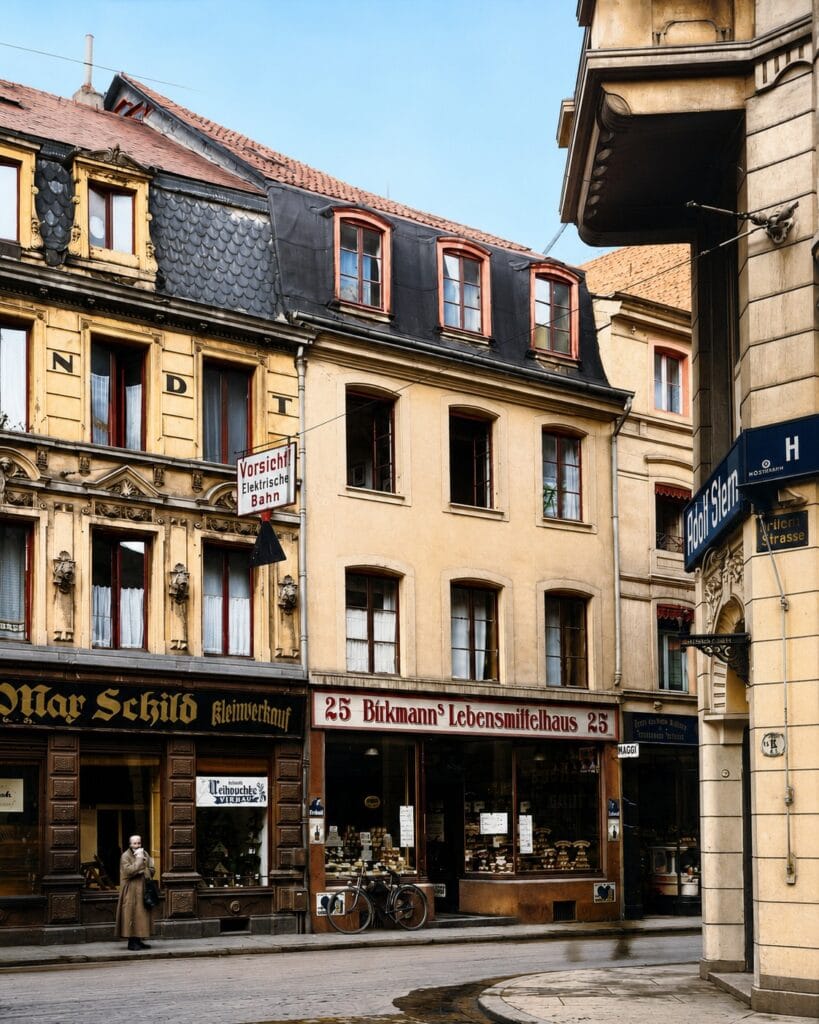
The building in this photo is Wenzelgasse 25. The back section — that's where the family lived. When Beethoven was away studying in Vienna, word came that his mother had taken a turn for the worse. He dropped everything and came home. She died in that building, with him at her side. The building was torn down in 1928. This photograph is the only thing left of it.
Mozart Said Something Nobody Forgot
Spring, 1787. Vienna. A seventeen-year-old from a small town stood in front of the most famous composer alive. When the boy played his prepared piece, Mozart's expression didn't change. He'd seen a hundred child prodigies. They all started to look the same.
Then the boy asked if he could improvise instead. Mozart gave him a theme — a difficult one. The room went quiet.
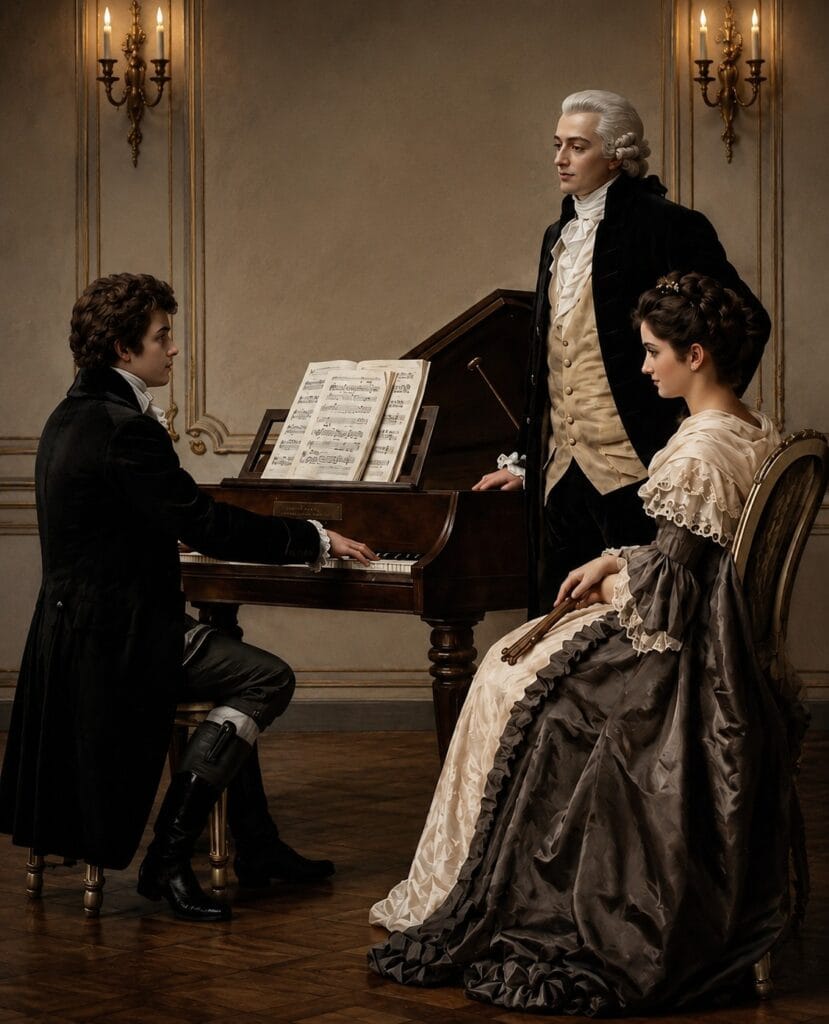
What happened next was different. The boy hit the keys like something in him had been waiting to get out. He played with the theme, broke it apart, built something new from the wreckage. The air in the room changed. When it was over, Mozart walked to the next room and said something to his colleagues that people have been repeating for over two hundred years: "Watch that boy. The world will hear about him."
But the world almost didn't. Days later, news came that Beethoven's mother was dying. He packed his bags and left Vienna. The chance to study under Mozart — the one moment that could have changed everything — dissolved like it had never happened. Mozart died four years later, at thirty-five. The door closed. Beethoven had to find his way alone.
The Night He Made a Whole Room of Noblemen Feel Small
Vienna in the 1790s had a ritual. Wealthy aristocrats would invite the best pianists into their salons and watch them compete. Real money on the line. Real humiliation for whoever lost. The well-dressed musicians from noble families looked at Beethoven — the rough kid from the provinces — and didn't hide what they thought of him.
One night, Daniel Steibelt, considered the finest pianist in Austria, made the mistake of mocking Beethoven in public before playing. He put on a brilliant performance and waited. Beethoven walked to the piano, picked up Steibelt's own sheet music, flipped it upside down, and placed it on the stand. He played a few notes from the inverted page as a starting point, then took Steibelt's entire performance apart — note by note, phrase by phrase — improvising something that turned the room against the man who'd just been showing off.
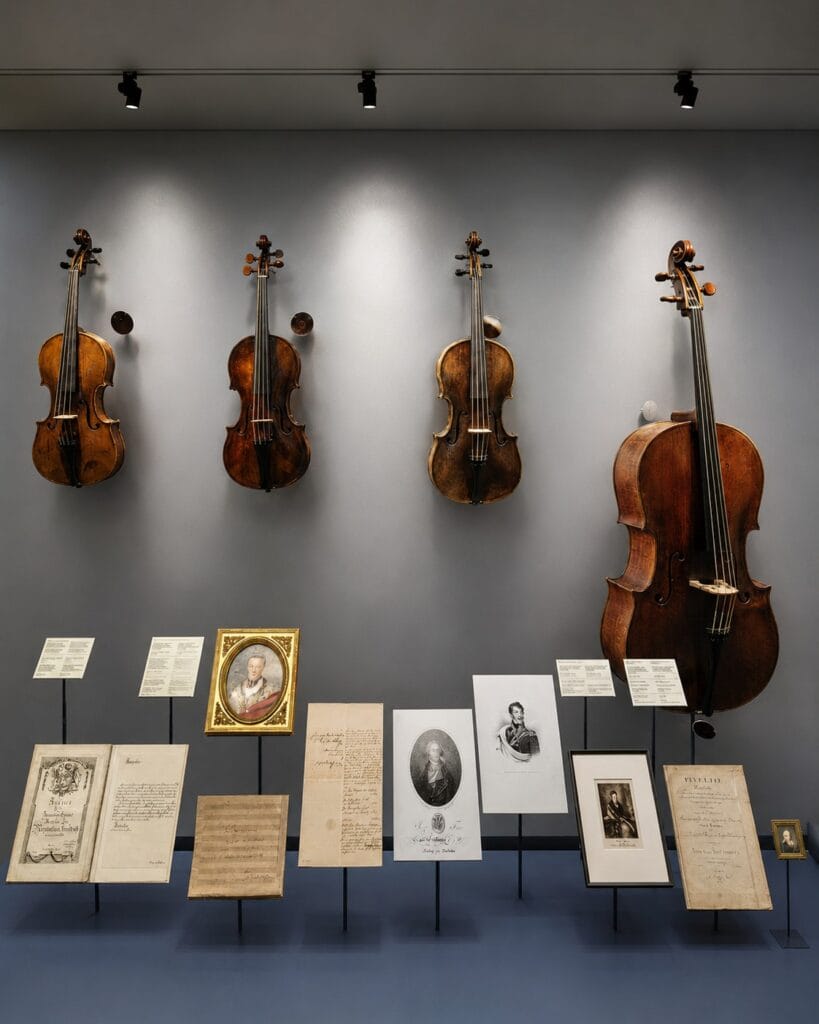
Steibelt left the salon mid-competition. He reportedly refused to enter any city where Beethoven lived, for the rest of his life. In the audience that night was Karl von Lichnowsky, an aristocrat who had just witnessed something he couldn't explain. He gave Beethoven a complete set of string instruments — two violins, viola, cello — made by Italian masters. The message was simple: focus on nothing else. Those instruments still hang on the wall at Beethoven-Haus Bonn today, surrounded by the archival documents from that era. A night of humiliation turned into a lifetime of support.
He Didn't Just Cross Out the Name. He Cut a Hole in the Paper.
May 1804, Vienna. Beethoven's student Ferdinand Ries burst into the room with news: Napoleon had crowned himself Emperor.
Beethoven had believed in Napoleon the way people believe in someone who might actually change the world. The French Revolution had lit something in him — the idea that rank and bloodline didn't have to determine what a person could become. He'd poured that belief into his biggest symphony yet, and written Napoleon's name across the title page. The man was supposed to be the hero of a new era.
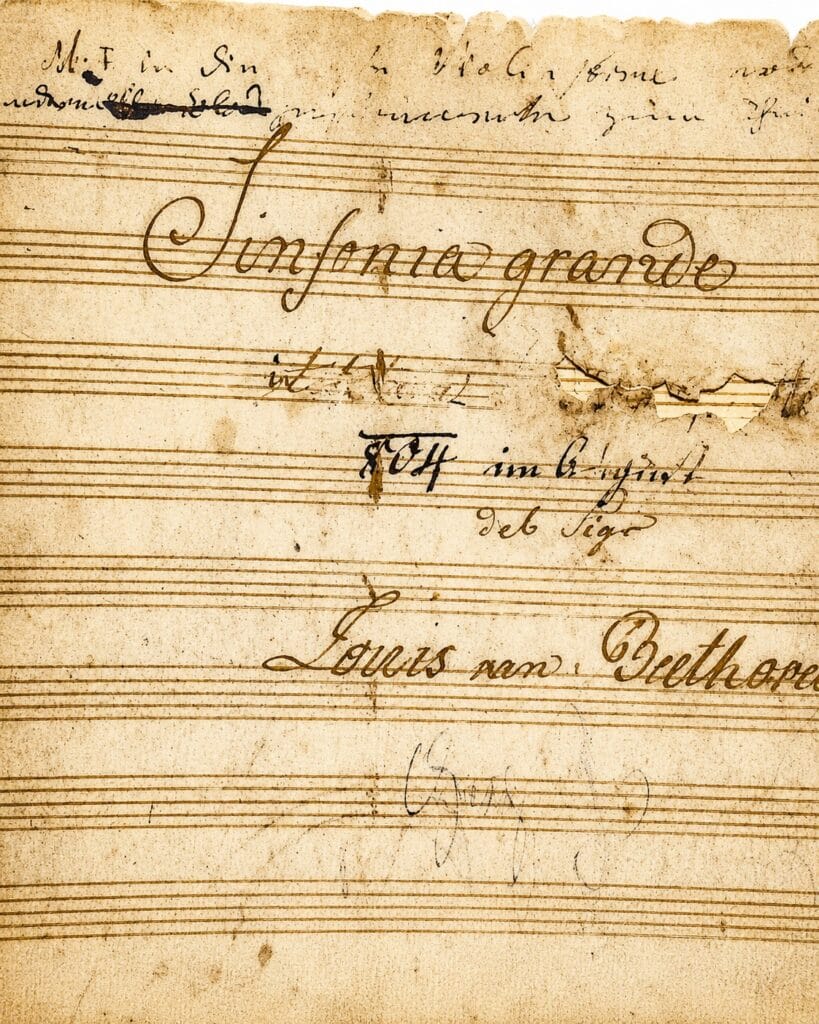
The word on the title page was "Bonaparte." Beethoven started scratching it out. A pen wasn't enough. He grabbed something sharper. He scraped and scraped until the paper tore. A hole — a real, visible hole — opened up where the name had been. That hole is still there. You can see it in the photo. Two hundred years later and the rage is still sitting in the paper.
He only crossed out the name. He didn't change a single note of the music.
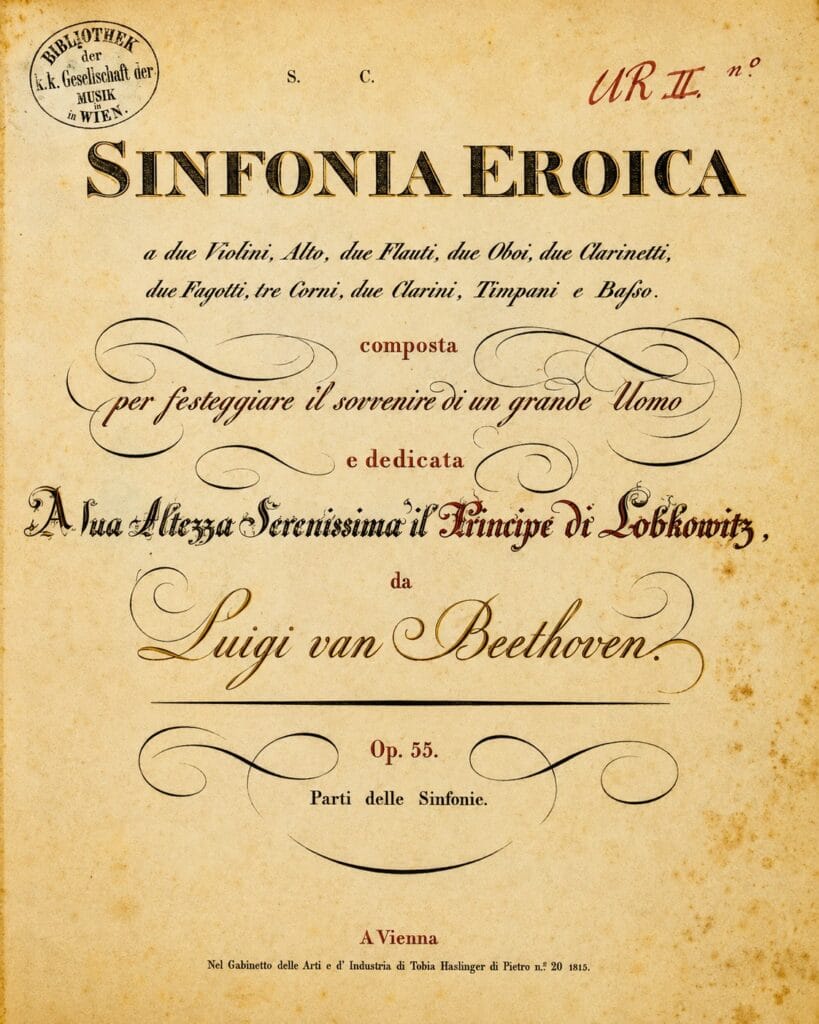
Two years later, the symphony was published. Napoleon's name was replaced with that of Prince Lobkowitz, a supporter who'd actually earned it. The new subtitle was in Italian: "composed to celebrate the memory of a great man." Not the Emperor. Not the man who'd just grabbed power. The memory of whoever Napoleon used to be, before all of this. Beethoven didn't compromise. He buried the man with one sentence.
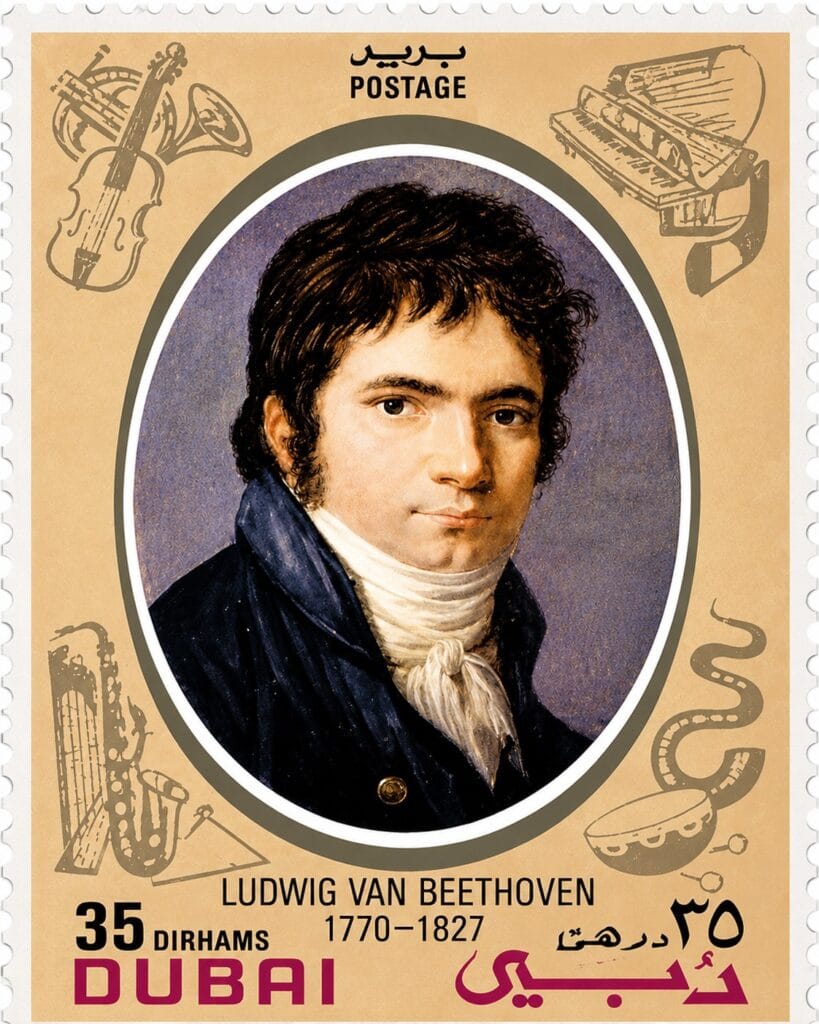
This is what Beethoven looked like during all of that. The portrait was painted in 1802 by Danish artist Christian Horneman — Beethoven was thirty-one or thirty-two. The curly hair worn loose, no powdered wig, was a deliberate choice. It was the style of young Europeans who believed the Revolution had meant something. He believed in what Napoleon had stood for. He'd just watched Napoleon throw it away. That same October, he sat down and wrote what people later called a suicide note.
The Letter He Hid for Twenty-Five Years
October 1802. A quiet village outside Vienna called Heiligenstadt. His doctor had sent him there to rest. His hearing had been getting worse for years, and he'd told almost no one. A musician who couldn't hear — what would people say? What would they think? He'd been performing, composing, pretending. Now, alone in a rented room, he picked up a pen.
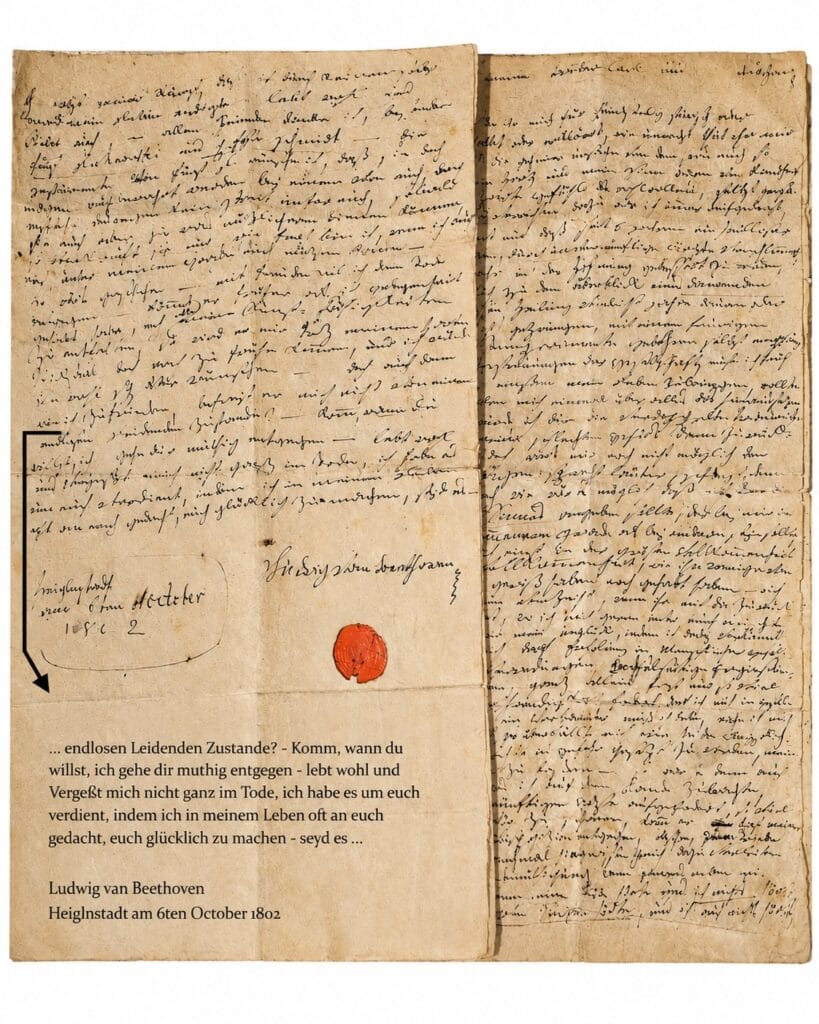
The letter was addressed to his brothers. Near the end, in handwriting that gets shakier as it goes, he wrote: "Come when you will — I will meet you with courage." He was writing to death. He'd thought about it. He was being honest about that for the first time.
But he didn't stop there. He kept writing. "My art held me back. I could not leave this world before I had done everything I felt I was meant to do." People call this letter his suicide note. It wasn't. It was something harder to write than a suicide note — it was a decision to stay.
He folded it up and never sent it. He put it in a hidden drawer and kept it there for the rest of his life, twenty-five years. When he died in 1827, the people cleaning out his room found it. The world read it for the first time after he was already gone. The man who seemed like he feared nothing had been carrying this the entire time.
He Couldn't Hear a Word Anyone Said — So He Carried a Notebook
By 1818, conversation was impossible. His hearing was completely gone. So he started carrying a small notebook everywhere. When someone wanted to talk to him, they wrote in the book. Beethoven answered out loud. His voice went into the air and disappeared. Their words stayed on the page.
Those notebooks — there are around 139 of them — still exist. The Staatsbibliothek zu Berlin holds the collection. One page shows what his housekeeper wrote after a trip to the market: "No crabs today, only for seven Kreuzer. I bought carp instead. Two roasted pigeons for dinner. Total: seven Kreuzer." That's it. That's a page from the life of the man who wrote the Ninth Symphony. A shopping note. A receipt.
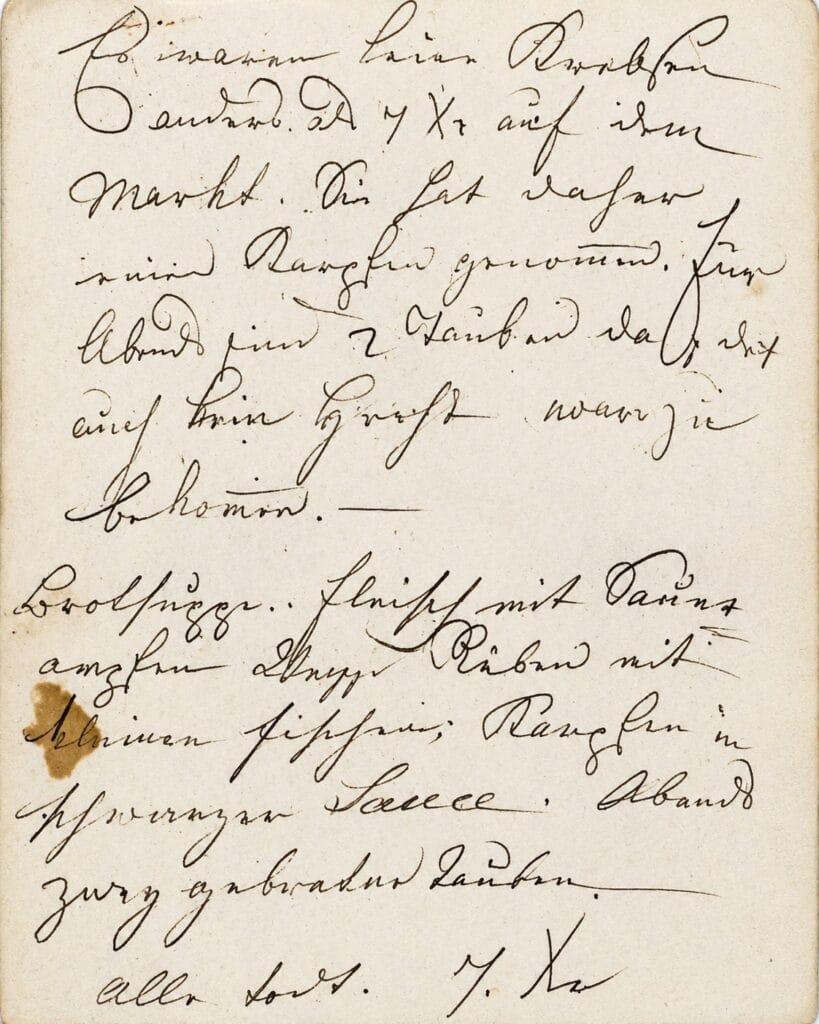
He checked the receipts carefully. Not because he was cheap — because in a world where he couldn't hear anything, a piece of paper was one of the few things he could verify. Everything else was gone. The sound of the street outside. The sound of a voice saying good morning. The sound of his own music. All of it, silent.
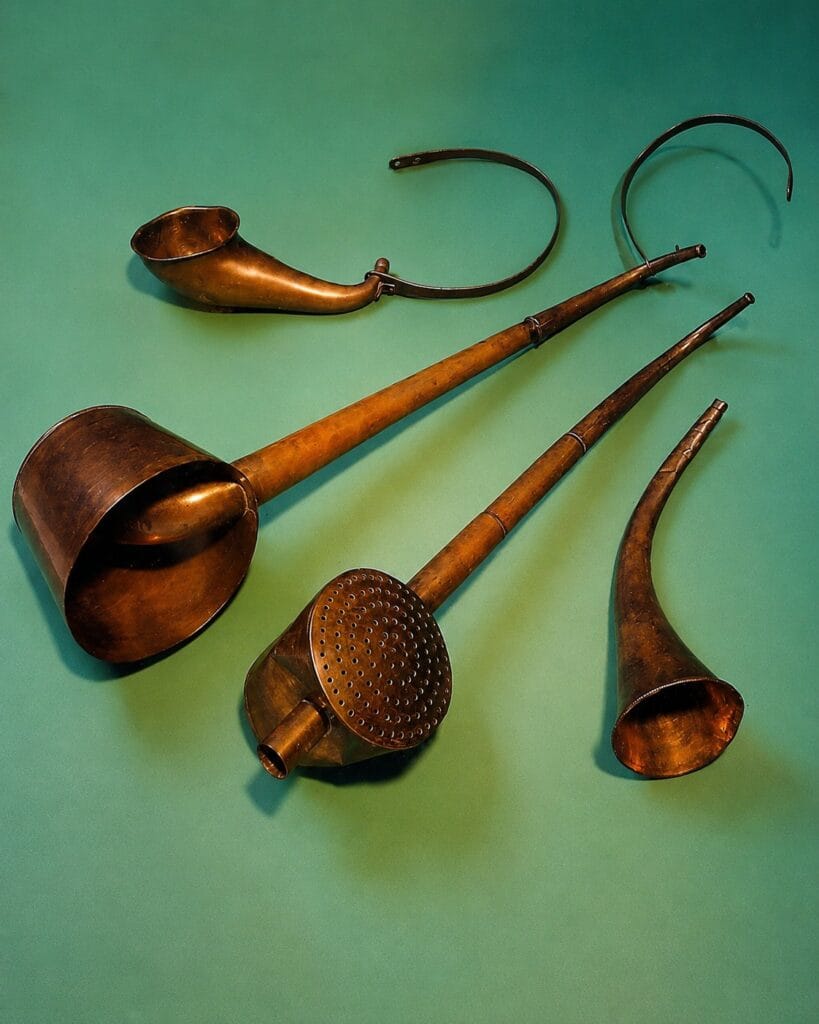
These copper trumpets are the hearing aids Beethoven used, built specifically for him by Johann Nepomuk Mälzel around 1812 to 1814. He brought them to salons. To rehearsals. To meetings with students. He pressed them to his ear and tried to catch whatever sound remained. Eventually, they stopped working at all. When the trumpets failed, he tried something else: he pressed his teeth against the piano frame while playing, and felt the vibrations through his jaw. Bone conduction. That's what was left. And that's what he used to write Symphony No. 9.
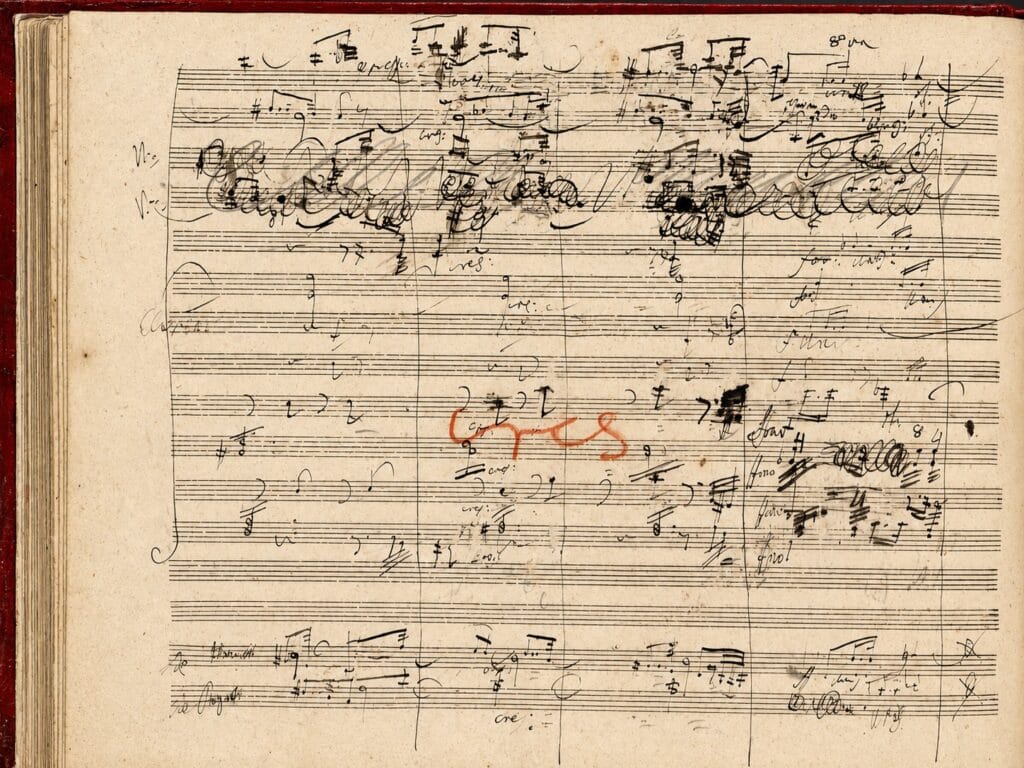
Look at this manuscript. The notes crowd the lines. Corrections pile on top of each other. Red ink cuts across whole passages. This isn't the clean work of someone hearing it in their head perfectly — it's someone fighting their way to the right answer. Note by note. Revision by revision. Through bone vibrations and muscle memory and forty years of knowing what sound feels like. UNESCO registered this manuscript as part of the Memory of the World Programme. It's considered one of the most significant documents the human race has produced.
Five Thousand People Stood Up — He Had No Idea
May 7, 1824. Vienna. The Kärntnertor Theatre. Symphony No. 9 had its first performance. There were technically two conductors that night. The official one was Michael Umlauf. The other was Beethoven, standing at the front of the stage, waving his arms. Umlauf had quietly told the orchestra beforehand: "Don't look at him. Follow only me." Beethoven didn't know. He was in his own world, following music only he could hear.
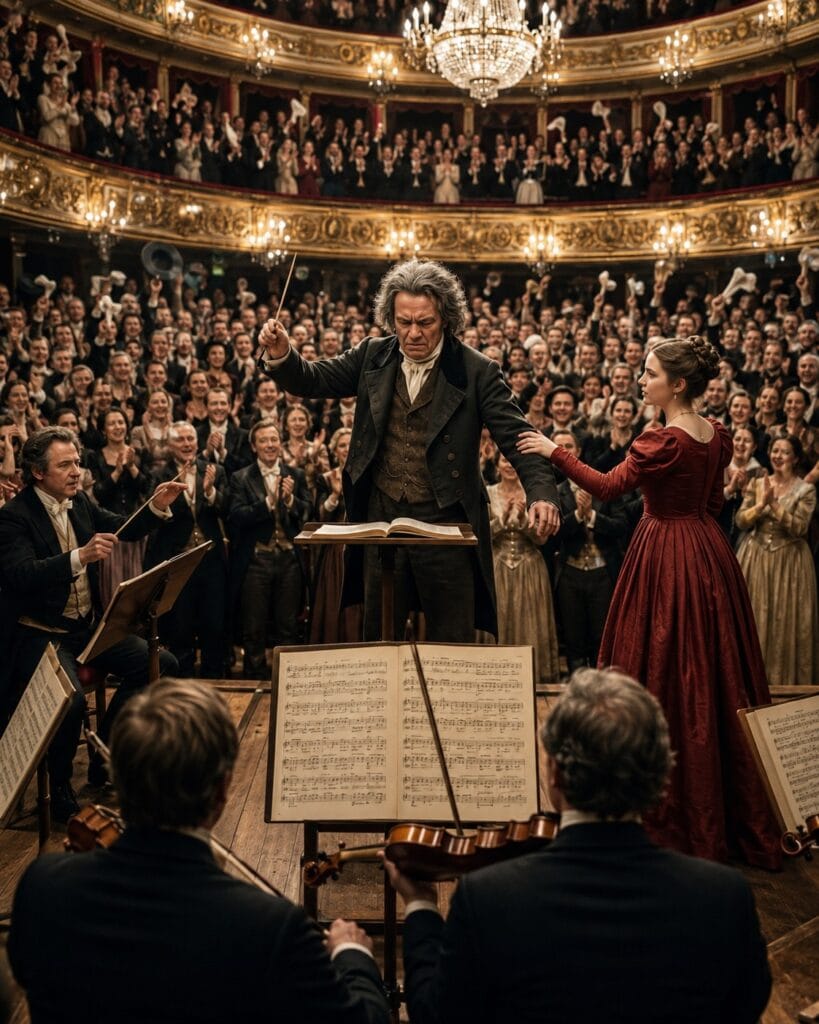
When the last note played, the audience lost their minds. Hats flew into the air. Handkerchiefs waved. People stood and clapped — not three times, the way you were supposed to do for the Emperor, but five. Five rounds of applause. The noise was enormous.
Beethoven was still conducting. Facing the wrong way. Still moving his arms to music that had already ended. Alto soloist Caroline Unger walked over and gently turned him around by the sleeve.
He saw it then. Five thousand people on their feet. He had no idea they'd been doing that. He saw it — and that was the only way he got to know.
Nobody Knows Her Name. Nobody Has Ever Known.
July 6, 1812. A hotel room in Teplitz, Bohemia. A hot summer evening. The sound of carriages outside — though Beethoven couldn't hear them anymore. He sat at a desk and picked up a pencil. His hand shook a little. He wasn't writing music.
"My angel, my everything, my very self —"
In German, there's a word — "Du" — that you only use with someone you're completely intimate with. A spouse. A lover. Someone you've let all the way in. Beethoven almost never used it with anyone. In this letter, he used it throughout. It was the only time, across the hundreds of letters that survive from his life, that he wrote to anyone that way.
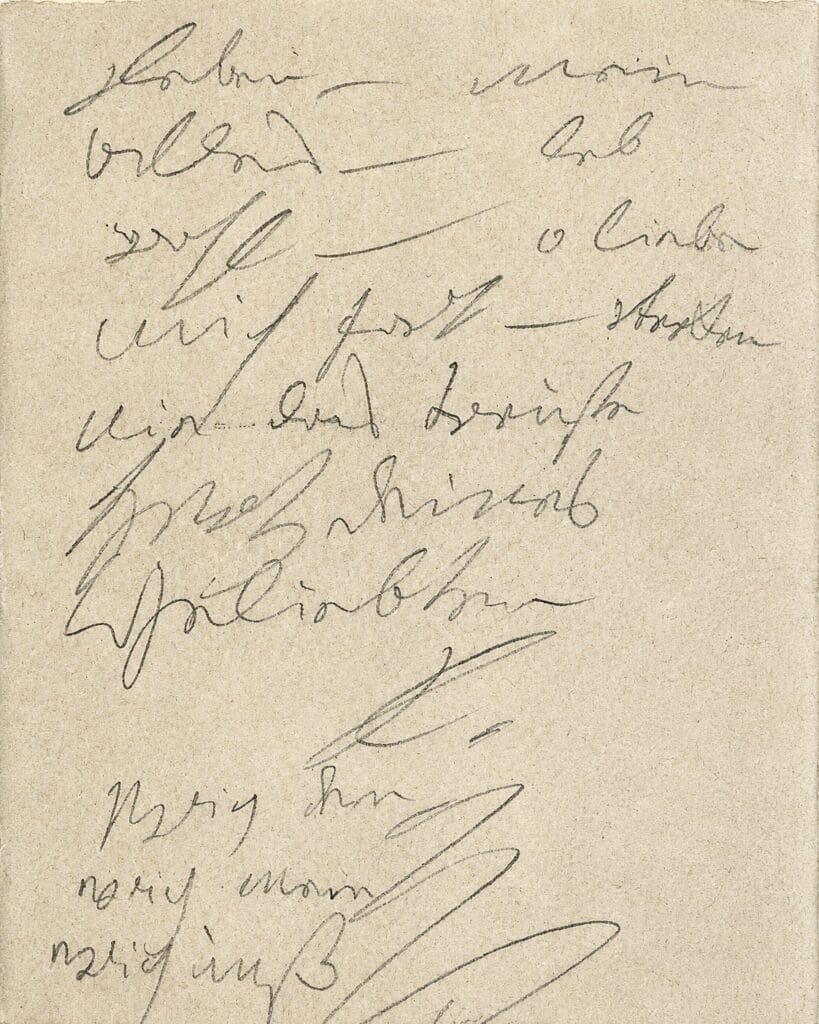
The letter ran to ten pages. He wrote it across three sittings — the morning of July 6th, the evening, and again on July 7th. Meaning he wrote through the night. He wrote things like "if you don't love me, I cannot live." And: "Either always together, or never." The cold, difficult man who terrified orchestras and threw tantrums at patrons — he doesn't exist in this letter. Someone else does. Someone who needed another person completely.
The last three lines of the letter:
"ewig dein — ewig mein — ewig uns."
Eternally yours. Eternally mine. Eternally ours.
He didn't send it. Nobody knows why. Maybe she was already married. Maybe the difference in social class made it impossible. Maybe he wrote it knowing he could never actually give it to her. The letter went into a hidden compartment in his wardrobe, and stayed there.
In the spring of 1827, Beethoven died. His assistant Anton Schindler opened the wardrobe and found a hidden drawer. Inside: three letters. No recipient. No date. No name. Only "Immortal Beloved" — Unsterbliche Geliebte — written at the top.
Two hundred years of research have followed. Scholars analyzed the watermarks on the paper and placed the letters in 1812. They tracked Beethoven's travel schedule. They cross-referenced the location of every woman in his life during that summer. The two most likely candidates today are Antonie Brentano and Josephine Brunsvik. Nobody has been able to confirm it. Nobody has been able to rule either of them out completely.
The letter is still in Berlin, at the Staatsbibliothek. The name is still missing. That's what makes this the most human document Beethoven ever produced — not a symphony, not a sonata, but ten handwritten pages proving that the most isolated man in the room was also the one most desperate to be known by somebody.
The letter stayed in the drawer. The name never made it out.
The Boy He Tried Too Hard to Love
Beethoven never married. As his world grew quieter, his need for some kind of family grew louder. In 1815, his brother died of tuberculosis and left behind a young son named Karl. Beethoven saw the boy and made a decision: this was his child now. He would raise him, protect him, give him everything.
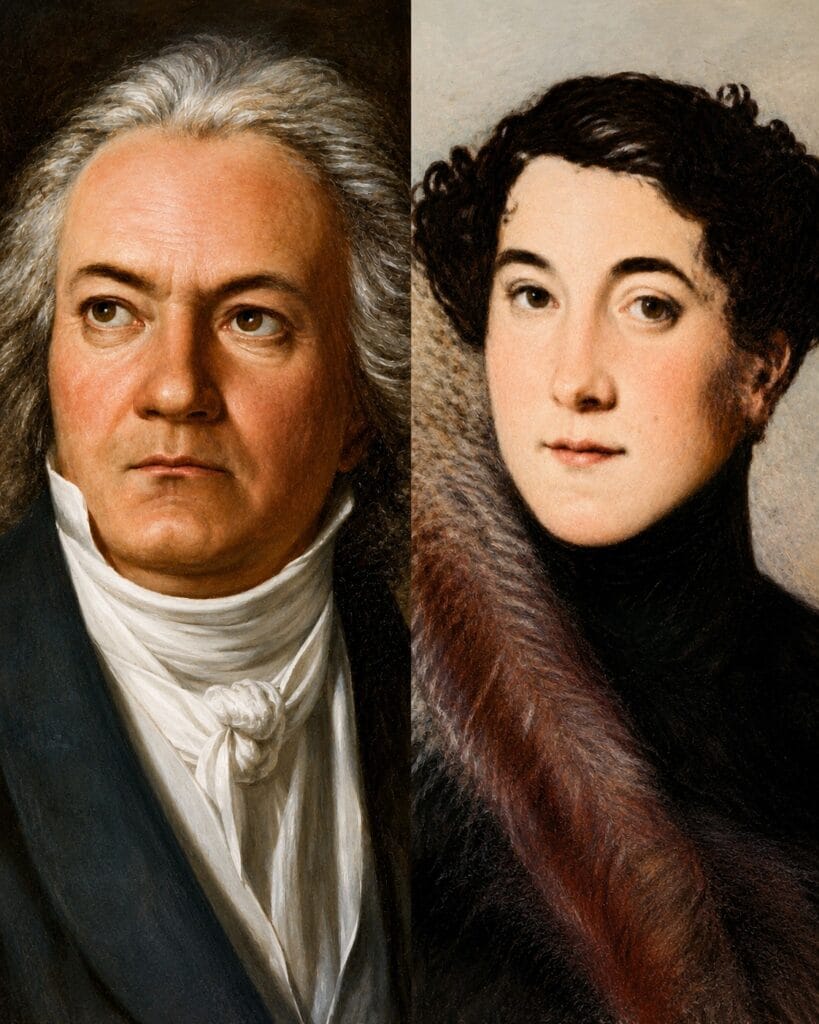
He spent five years fighting for custody in court, battling Karl's mother Johanna, whom he despised so thoroughly he called her "the Queen of the Night" — the villain from Mozart's opera. He won. And then he used that victory to do exactly what he'd promised himself he wouldn't do to a child. He controlled everything. He monitored Karl's friends, his schoolwork, his thoughts. The apartment became a kind of prison.
In 1826, Karl put a pistol to his own head and pulled the trigger. The bullet missed. He survived. But the news destroyed Beethoven in a way that the deafness, the failed romances, the years of physical pain — none of it had. His health collapsed within months. He died the following spring.
Three Days Before the End, He Picked Up a Pen One Last Time
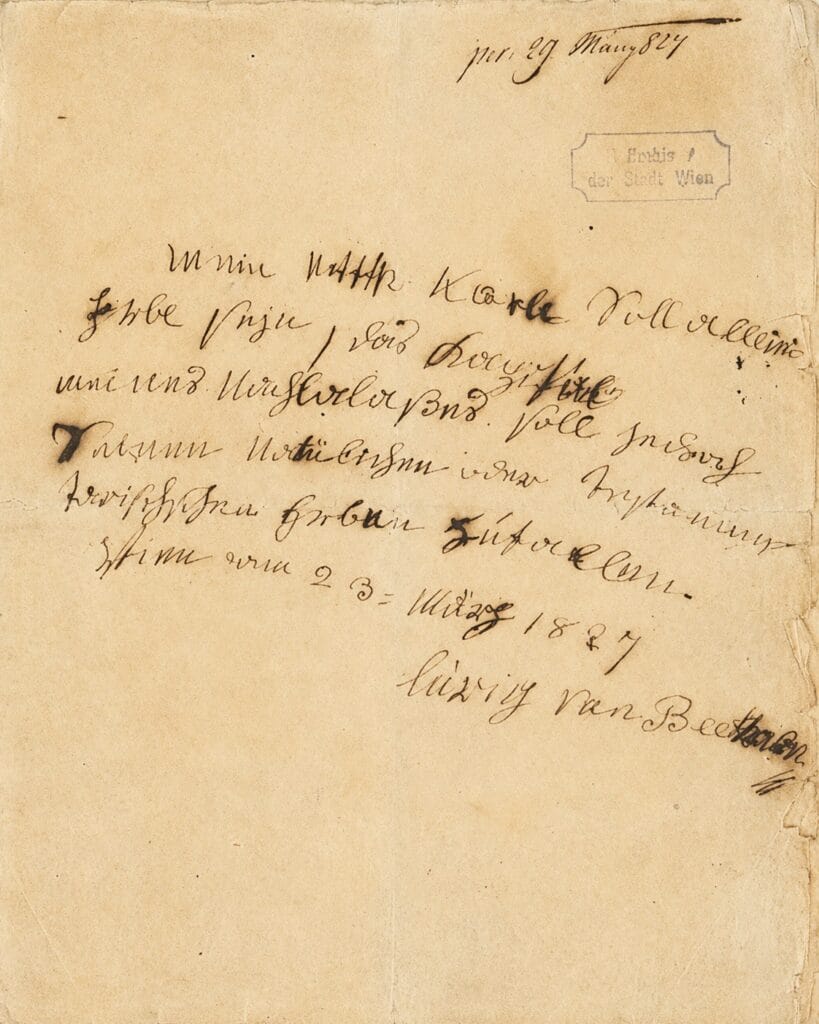
March 23, 1827. Three days before he died. He dictated his will from his bed. The document, now held at the Wienbibliothek im Rathaus in Vienna, has the official stamp of the Archiv der Stadt Wien — it was formally received on March 29th, two days after he was already gone. The content is one sentence: "My nephew Karl shall be my sole heir." The signature at the bottom — "ludwig van Beethoven" — is barely legible. His hand was failing. He left everything to the boy who had nearly ended his own life, and whose attempt had broken Beethoven's heart beyond repair.
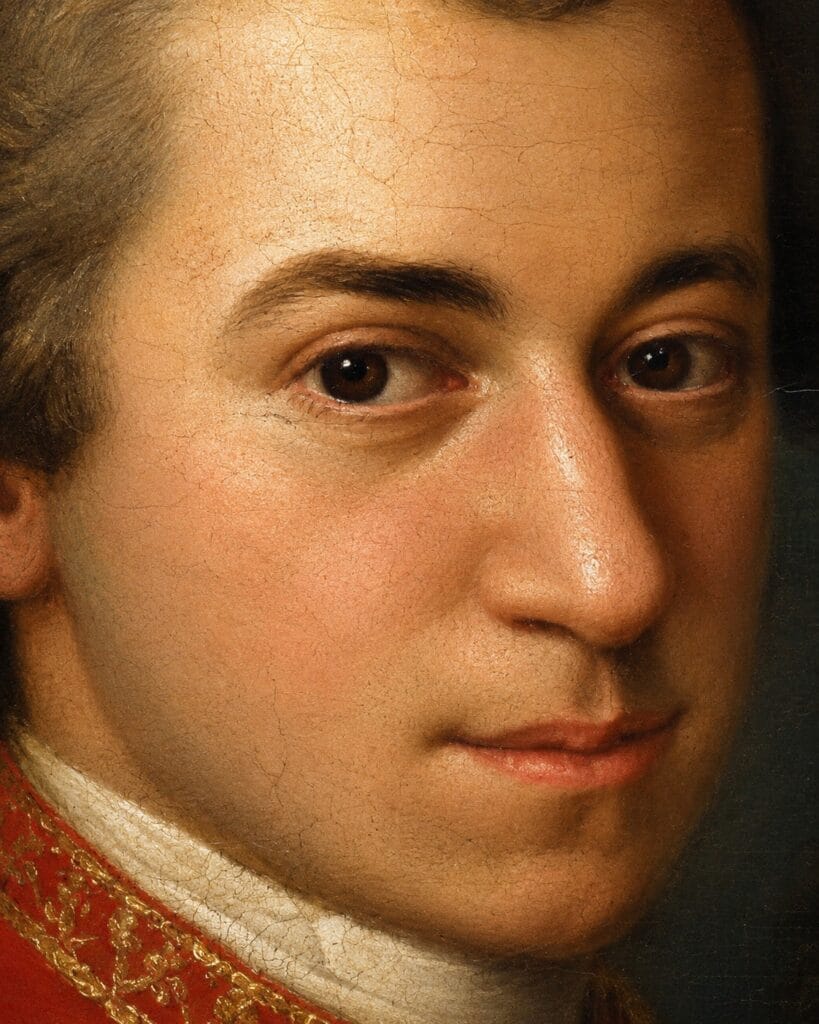
In 1787, Mozart told a room full of people to watch the boy at the piano. Forty years passed. Beethoven wrote nine symphonies, thirty-two piano sonatas, sixteen string quartets, and a mass of other work that reshaped what Western music was capable of. Mozart didn't live to see any of it. But before all that — before any of it — there was a sixteen-year-old walking into a court building with a document, trying to find enough money to feed two younger brothers. That's where it started.
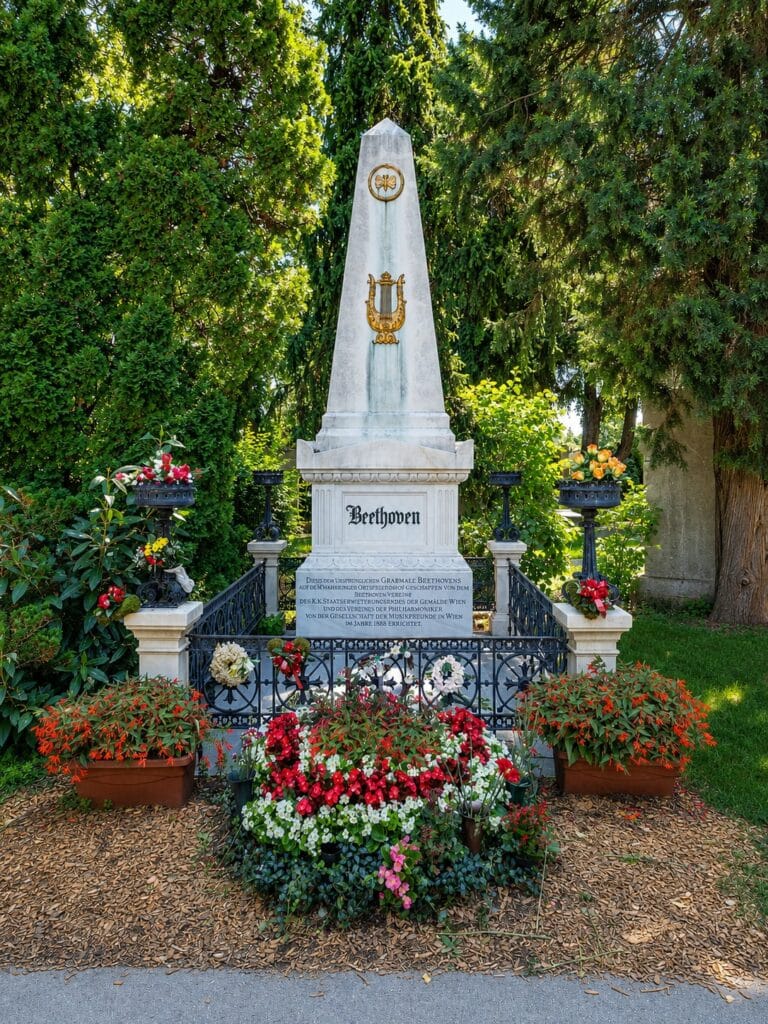
Wiener Zentralfriedhof. Section 32A, Grave 29. A white marble obelisk with one word on it: Beethoven. No dates. No description. Just the name. Franz Schubert — who worshipped Beethoven his entire life — is buried right beside him.
What's Left Isn't the Music
A title page with a hole torn through it.
A few letters that never got sent.
A will written in shaking handwriting, three days from death.
A shopping receipt from a housekeeper who bought carp instead of crabs.
That's what's left. And in those pieces of paper, there's no genius. There's a person. Someone who bought groceries for his brothers at sixteen. Someone who wrote a suicide note and then chose to stay. Someone who was so desperate to love one person completely that he put it all in a letter he never mailed. Someone who held a pencil to paper when his hand was almost done working, and left everything to the boy who had nearly broken him.
He never let go of the music. Not a genius. Just a person who refused to stop.
The men who played music on the deck of the Titanic until the ship went under made the same choice Beethoven did — to keep going past the point where stopping would have made more sense.
https://framedtruth.com/beethoven-was-not-a-genius-he-was-someone-who-refused-to-stop/
Comments
Post a Comment
"Share an amazing fact that most people don't know! Your idea could be our next post."